
Lead Consultant
introduction
SEO died again. 😟
It’s fine though. My profession just does that sometimes. This time, it’s supposed killer is AI, and the emergence of the chat-based LLM. This had led in turn to the emergence of the field of AEO / GEO / many other acronyms.
However, while much of the discussion around that field gets into the nitty gritty of the technical detail - and as a professional dork, I’m as eager to charge down those rabbit holes as anyone - I wanted to zoom out and look at the wider picture of AEO. In this article, I’m going to outline how value is traditionally created and captured on the web, and why you can’t just transplant a business model built around a web of links and pages to a model of answers.
The economics of the web
The WorldWideWeb (W3) is a wide-area hypermedia information retrieval initiative aiming to give universal access to a large universe of documents.
Tim Burners-Lee, The WWW Project, 1993
The web, from it’s inception, is designed to be a network of documents, interlinked via Hypertext Reference (href). In the early days, this was more obviously apparent - getting content online meant writing a series of webpages, interlinking them as you saw fit, and uploading them to a server.
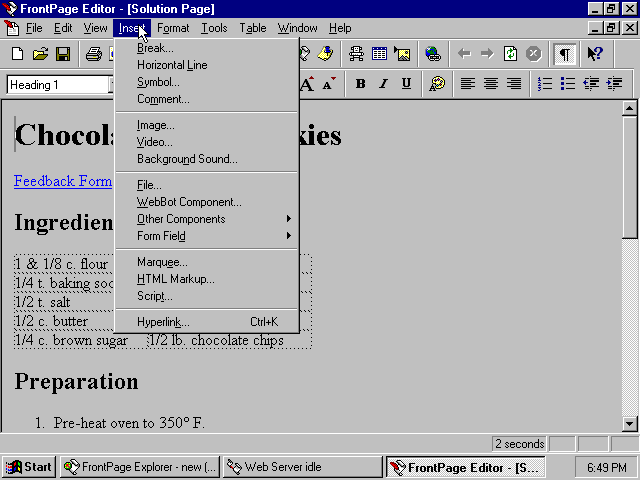
Honestly, we lost something as a society when we stopped using the marquee tag.
If you really want to throw a UX designer for a loop (and make them dislike you for being unnecessary pedantic), point out that there’s really no such thing as a website in a technical sense. Just individual hypertext documents, all interlinked via unique URLS - a web.
Today, this framing is somewhat abstracted away. There is, of course, such a thing as a website - pages are rarely written individually as documents in raw HTML, instead being added via a content management system, stored in a database and rendered out via a templating engine to create a unified, coherent experience. And the end user generally think about those experience in terms of domains and/or a website name, rather than browsing around a web of interlinked individual URLS.
But the underlying core components of the web are still the URL, the Page View and the Hyperlink. Indeed, some of the largest challenges facing Technical SEOs over the last decade plus has been downstream of development teams creating platforms that don’t assume that Hypertext-Link-URL document paradigm, often in the name of unifying code bases between the web and other surfaces such as mobile app stores. Move away from that, and you moved away from the all the benefits the web as a paradigm provided, including that critical arbiter of audiences for your content - the aggregator.
Abundance and Aggregation Theory
Welcome to the internet
Have a look around
Anything that brain of yours can think of can be found
We've got mountains of content
Some better, some worse
If none of it's of interest to you, you'd be the first
Bo Burnham, ‘Welcome to the Internet’, 2021
For my money, the best articulation of the economics of the web is Ben Thompsons 2015 piece, ‘Aggregation Theory’.
For example, printed newspapers were the primary means of delivering content to consumers in a given geographic region, so newspapers integrated backwards into content creation (i.e. supplier) and earned outsized profits through the delivery of advertising. A similar dynamic existed in all kinds of industries, such as book publishers (distribution capabilities integrated with control of authors), video (broadcast availability integrated with purchasing content), taxis (dispatch capabilities integrated with medallions and car ownership), hotels (brand trust integrated with vacant rooms), and more. Note how the distributors in all of these industries integrated backwards into supply: there have always been far more users/consumers than suppliers, which means that in a world where transactions are costly owning the supplier relationship provides significantly more leverage.
The fundamental disruption of the Internet has been to turn this dynamic on its head. First, the Internet has made distribution (of digital goods) free, neutralizing the advantage that pre-Internet distributors leveraged to integrate with suppliers. Secondly, the Internet has made transaction costs zero, making it viable for a distributor to integrate forward with end users/consumers at scale.
Ben Thompson / Stratechery, Aggregation Theory 2015.
Because aggregators deal with digital goods, there is an abundance of supply; that means users reap value through discovery and curation, and most aggregators get started by delivering superior discovery.
Then, once an aggregator has gained some number of end users, suppliers will come onto the aggregator’s platform on the aggregator’s terms, effectively commoditizing and modularizing themselves. Those additional suppliers then make the aggregator more attractive to more users, which in turn draws more suppliers, in a virtuous cycle.
Ben Thompson / Stratechery, Defining Aggregators, 2017
It’s no coincidence that the largest companies in the world for the internet age are all aggregators (Google, Meta, Amazon, with Apple and Microsoft acting as portals to those aggregators).
The core argument of many of the antitrust cases that came to a head in 2025 was based around that the centralisation of this power constitutes a monopoly - a position that US courts largely upheld, albeit with meagre penalties that did nothing to meaningfully dissuade that consolidation. (One of the important but less discussed aspects of AI, and one I think will become ever-more-meaningful in 2026 is how the emergence of ChatGPT gives Google cloud cover for more aggressive vertical integration - but that’s a whole other article)
Google Search, and URL Economics
Google, or at least Google Search, is unique in that it is the aggregator of the open web. The other major aggregators all came later, and chose to run closed ecosystems. Amazon will happily optimise their experience to earn clicks from search, but they’ll never send that traffic back out of their ecosystem to a Shopify-run cart in order to complete a purchase.
If discoverability is, as Thompson argues, the valuable commodity of a digital economy, and on the web the mechanism of being discovered is the link leading to the page view, and the owner of those links is in turn in a position to extract significant commercial value.
It’s no accident that selling links via Adwords remains by far the bulk of Google’s revenue, or that every other major aggregator runs an effectively closed platform. I’m sure Google, with the benefit of hindsight, would have much rather rolled out Google Shopping and Payments earlier and more aggressively, creating a vertically integrated shopping experience rather than sending the traffic out freely that in turn allowed Amazon to reach their critical mass. Closed networks allow the aggregator to extract a greater share of the value created within those networks. But not every truth was apparent in 1998, and it’s not as if selling links has not been a massively successful business for Google!
It is, however, a lesson the LLMs have learned.
The difference between web and AEO economics
On the surface the mechanics of LLM feels familiar to any SEO. There’s a crawler, following links around the web, visiting URLS, indexing and processing the content and then serving it in response to a users query.
But the users experience is fundamentally different. There is no link (or, at least, no link that anyone clicks - links from chatGPT are interacted with a fraction of the time versus the traditional search result), no pageview, and no subsequent exchange of value. It is a closed network, only unlike a TikTok or an Instagram who provide alternative incentives to drive creation (whether monetarily such as ads, or something more intangible such as social status and a means of expression) there’s no recompense for the creator. The link-based value chain is redundant in an AI-first world.
Now, from the end users experience, this centralisation is often a positive. The web may have been built around documents, but what users often really wanted are answers. And often the answer to a question might be spread across several documents, requiring the user to go hunting across several searches and links to get to the answer they want. ChatGPT has had a meteoric rise for a reason!
But one of the contradictions at the heart of AI is that it undermines the very structures that gave rise to the web - the link, the click, the PageView - while also relying on the web as it’s primary source of training data.
For AEO to truly develop as a channel and for AI to become a meaningful path to reaching customers, different models have to start to emerge.
Commodification, brands, and ‘The Doordash problem’
One model is to replicate the mobile app store model, encouraging organisations to integrate directly with LLMs just as they integrated with mobile operating system APIs. And I’m sure this is the model OpenAI, Google would love - they get to effectively enforce app-store style rents on the entire economy. I’m of the opinion that AI is very much in a bubble as I write this that’s due to pop, but if there is a case for the level of investment in infrastructure for AI, it’s the amount of commercial value that represents if it can be pulled off.
But there’s a contradiction at the heart of that model, at least for the supply side of that relation ship. It runs into the risk of being stuck in a commodified relationship and fighting in a race to the bottom.
‘The Doordash’ problem, coined by Nilay Patel of The Verge, is an articulation of this issue. Patel argues that to embrace AI is to give up ownership of the customer experience
So what, exactly, is the DoorDash problem? Briefly, it’s what happens when an AI interface gets between a service provider, like DoorDash, and you, who might send an AI to go order a sandwich from the internet instead of using apps and websites yourself.
That would mean things like user reviews, ads, loyalty programs, upsells, and partnerships would all go away — AI agents don’t care about those things, after all, and DoorDash would just become a commodity provider of sandwiches and lose out on all additional kinds of money you can make when real people open your app or visit your website.
Nilay Patel, ‘The DoorDash Problem’, The Verge Decoder Podcast
Patel’s argument is not that AI adoption is optional, but that AI intermediaries collapse differentiation by absorbing the customer experience.
In this model, DoorDash ceases to be a destination and becomes an API. And once a business is reduced to an API, margins become the only remaining moat. Sooner or later, a competitor offers the same interface at a slightly lower cost, passing the savings on to the customer. The result is a race to the bottom.
This is the decision organisations face whether they articulate it or not. The mistake isn’t adopting AI interfaces. The mistake is adopting them without owning the economic surface they create.
The counterargument many companies made to him is that it’s their brand that acts as a moat. People won’t order ‘a taxi’, they’ll order ‘an Uber’ because they have a level of pre-existing brand trust with Uber that’s no there if AI is simply ordering from an unknown provider. That brand will protect them.
Frankly, I think that is at best naive. The consumer brand is, again, an artefact of 20th century economics, and the true currency of the digital age is discoverability. Uber won not because of their incredible emotional mass storytelling on TV (do they even do TV adverts, and would they even get the reach from them to accomplish that in 2026?), but because they consolidated taxi firms into one place, creating a new and superior user experience in the process versus the traditional ringing around various random providers in the hope that, maybe, a taxi might turn up, possibly, who can tell. (Not to mention a review system that disincentivised some drivers from the awkward thinly vailed racist rant about ‘that there London’ that made the average trip home such a joy!).
It’s the UX, not the brand, that differentiates every successful large scale business in the 21st century.
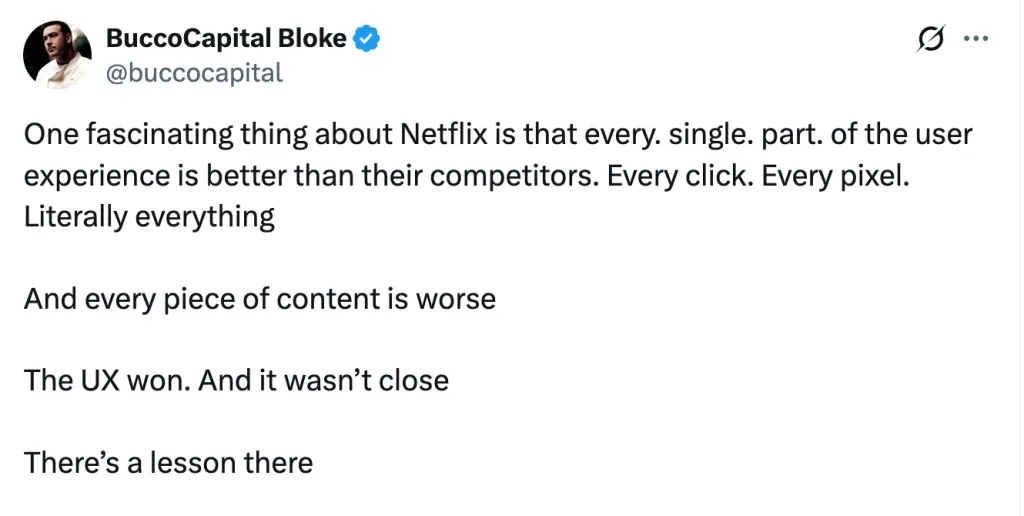
To just control of the product experience that over to OpenAI would be insane! They would just be giving control of their moat away. But it’s also not an option to simply opt out of AI - ChatGPT is the fastest growing tech product in history, and any organisation ultimately has to meet the customer where the customer is.
What’s needed is a method of to established an alternative to the pageview as the point of value exchange. And into that void, enter MCP.
MCP and the ownership of the experience
While still a fairly early-stage technology, Model Context Protocol or MCP is fast emerging as a standard for LLMs to communicate directly with other systems. It’s being positioned firstly as a solution for agentic systems to interact - the protocol that an LLM can use to tell a robot vacuum cleaner to start, or to request information from a SaaS data provider.
It is to AI what HTTP was to the web browser. A way of standardising communication between various systems in a way that promotes interoperation.
That in-turn creates a new ‘chokepoint’ for value extraction, recreating a point of leverage for brands.
The MCP prompt and response creates a moment where organisations can both create and exchange value, requiring something in return from their customers that aligns with their strategic product and marketing goals. It provides an opportunity to interact in a differentiated way, offering something that’s beyond not the proverbial Sandwich delivery API.
MCP is just one part of the emerging stack, of course. Vector Databases also change how data is stored, moving from the rigid exact match of SQL to a database of concepts that can be mixed and remixed in response to the customers prompt.
This change requires organisations to think holistically, from a product level on down, about how their services can fit into this paradigm. Simply sticking an MCP endpoint onto a web server is not going to be enough, just as simply sticking a print brochure on the web wasn’t enough in 1998. The companies that will win will be those that have products built around these new economic models, not those built around web-based economics.
AEO is, ultimately, not simply a technology problem. It’s a product and business model one too. The web rewarded those who understood links and views. AI will reward those who understand interfaces, protocols, and the new points of economic leverage.


